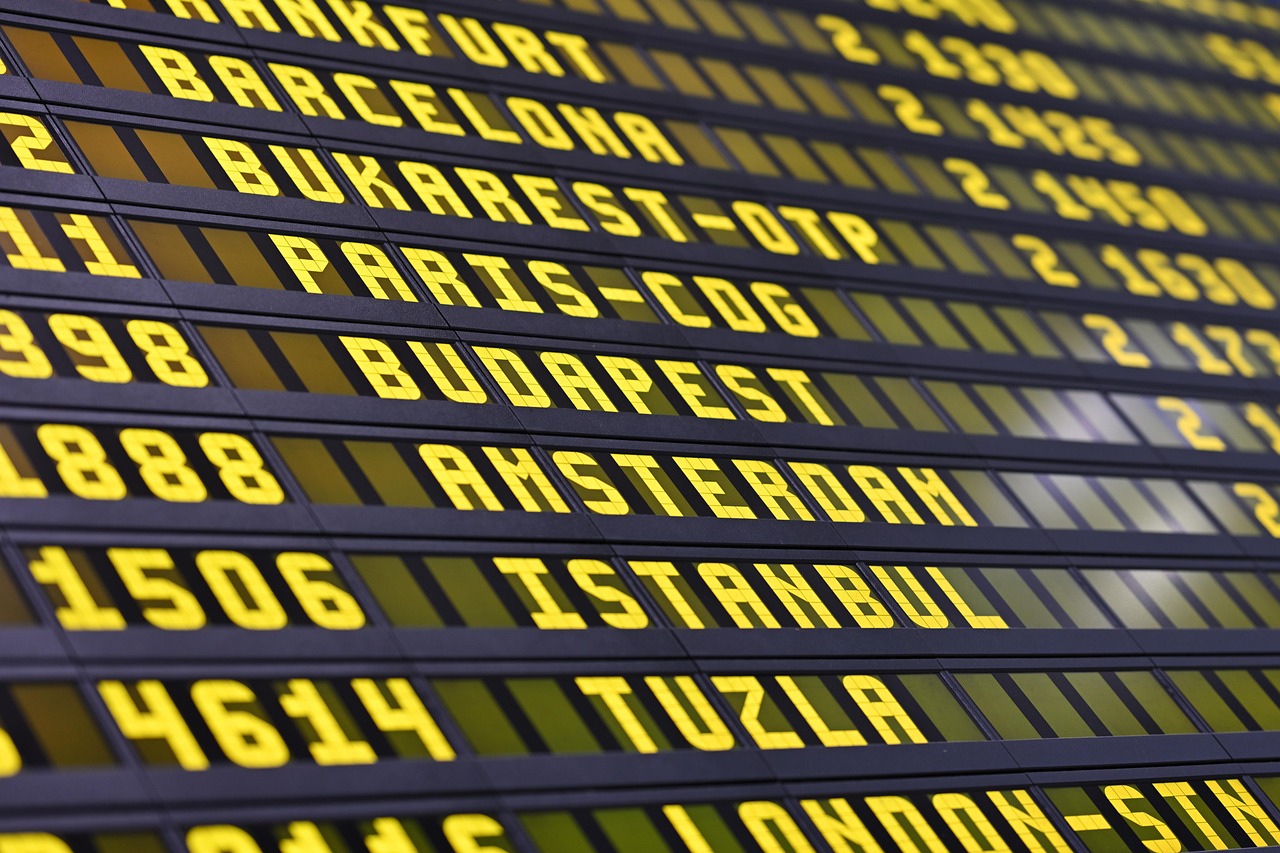
Airlines have canceled over 15,700 flights in European skies for August (about 2% of those scheduled), British Airways has suspended short-haul ticket sales for a week, and Lufthansa has announced strikes. The peak month of the summer holidays promises to be almost as hot for air travelers as the scorching weather gripping the Old Continent.
The situation has improved somewhat compared to June and July, when the rapid and unexpected recovery in demand caught most carriers and airports unprepared, left short-staffed after two years of Covid. However, the situation remains complex: "August is shaping up to be a hot one, and operators are very worried," admits Ivana Jelinic, president of Fiavet (the travel industry association of Confcommercio). Because in the event of flight cancellations or delays, the logistical and financial burden of the resulting disruption falls on agencies and tour operators, at least in the immediate future, who are required by European directive to provide assistance and alternative solutions to stranded customers.
The Impact on New Bookings
But the impact of this air traffic chaos on operators isn't limited to the costs and difficulties they face immediately. The problem is that this situation seems to have discouraged some travelers in recent weeks, at least those who hadn't yet booked their holidays, who have preferred to change their destination or postpone their departure until September. This risks jeopardizing the tourism sector's recovery after the excellent start of recent months.
"Most people who have already booked are trying to travel by any means," explains Jelinic. "But in some cases, we find ourselves forced to advise against certain destinations because the situation is complex. Just this morning I spoke with a client of mine who wanted to take a flight to Poland via Germany. I suggested that, if it's not essential to leave now, it would be better to leave at the end of August. Unfortunately, situations like this happen daily to me and many colleagues: we're advising people to postpone trips that can be postponed or moved forward. In other cases, those who had planned to travel abroad have preferred to stay in Italy or choose a destination accessible by alternative means to air.
The hope is that things will return to normal starting in September, both due to the natural reduction in tourist flows and because airlines and airports should have resolved the current bottlenecks by then. The problem is widespread, explains Pier Ezhaya, president of Astoi Confindustria Viaggi, which represents tour operators belonging to Federturismo: it affects not only airlines, but also airport facilities, with problems with check-in, ramps, security, parking, and baggage.
"All of this is seriously damaging our business, especially now that, after two difficult years, we were finally starting to see some light," says Ezhaya. "Fortunately, we're not seeing many cancellations, except for a few, mainly due to Covid. However, we've certainly seen a decline in new bookings, as many people prefer not to risk disruptions during their vacation. We're convinced that this rapid restart has caught everyone off guard, so with the end of the seasonal peak, from the end of September onward, these problems will be resolved."
The triggering factors, as is well known, are primarily linked to the fact that many airlines have divested during the pandemic, laying off staff, especially ground staff. In some cases, however, such as in Italy where it has been possible to access social safety nets, the disruption and difficulties have been less evident, although the interconnectedness of the airline industry is such that knock-on effects across all airports are inevitable.
The Need for Planning
The real problem, however, stems from further back and is structural, says Franco Gattinoni, president of FTO (the Federation of Organized Tourism of Confcommercio): "What's missing, and not just today, is planning at the national level. We can't rely on airlines, mostly low-cost ones, that add planes and launch new routes at the last minute through agreements that last only a few months and don't allow for quality tourism, which is what Italy needs." High-spending tourists, especially from abroad, tend to book their holidays well in advance, and to meet this demand, tour operators need long-term planning and certainty.
The pandemic has only made these existing contradictions explode: now it will take some time to return to equilibrium, and managing this process is essential: "I believe it's in the first place
"It's crucial for our country to understand flight flows and try to make them continuous," Gattinoni adds. "The tourist season started very well, albeit late. Now we have some concerns about next winter, especially due to rising fuel prices and inflation, but we want to be optimistic. However, we must try to break away from the model followed in recent pre-Covid years, which favored low-cost airlines, and try to encourage more sustainable and continuous tourism."
